


Cold-water swimming for beginners: how to start safely and what to bring
Cold-water swimming is no longer just for a handful of enthusiasts by a frozen pond. More and more people are trying cold water, and many keep coming back for the feeling afterwards: a clear head, a glowing body and a day that starts differently. If you're only thinking about it, we'll show you how to start gradually and safely, how long to stay in the water and what to bring to the shore.
What cold-water swimming is and why people try it
Cold-water swimming means gradually and regularly exposing your body to cold. It can be a cold shower, a short time outdoors in light clothing or a dip in cold water in nature. Your body gets used to the cold step by step, which is why regularity matters more than performance.
Cold-water swimmers most often say they feel fresher after the water, handle stress better and stop minding the cold in everyday life. For many it's also a moment just for themselves, or a shared ritual with friends.
When to start
Autumn is the best time to start, when the water cools slowly and your body has time to adapt. If you start in September or October and go regularly, you'll handle cold water much better by winter. You can start any time, though; in winter you just need to be even more careful.
How to start: step by step
- A cold shower at home. At the end of a warm shower, add 10 to 30 seconds of cold water. Start with your legs and gradually add your arms and torso.
- A cold bath or a short dip. Once the shower no longer bothers you, try a cool bath or a short dip in natural water during a warmer season.
- Your first outdoor swim. Choose a familiar spot with an easy way in and go with someone who already has experience.
- Regularity. Two or three swims a week work better than one long, exhausting one.

How long to stay in the water
At first, a really short time is enough. Your first dips can last just 30 seconds to a minute; then extend the time gradually. A common rule of thumb is roughly one minute in the water for every degree of water temperature, but for beginners that's more of an upper limit. Listening to your body matters more than numbers. When you start losing feeling in your fingers or begin to shiver, it's time to get out.
Safety first
- Never alone. Swim with a buddy or a group, ideally in daylight.
- Know the spot. Find out where the safe way in and out is, how deep it is and whether there's a current.
- Ease in slowly. The first moments in cold water trigger a sharp gasp and fast breathing. Walk in step by step and wait for your breathing to settle. Leave jumping in and putting your head under for later.
- Don't overdo it. It's not a competition. Staying in too long risks hypothermia.
- Your health. If you have any health issues, talk to your doctor before your first cold-water swim.
What to bring
Good preparation decides whether you enjoy your swim or spend your time on the shore fighting the cold. Here's what you'll need:
- A towel or changing robe to dry off and change quickly.
- Warm layers that are easy to put on even with numb hands. Don't forget a hat and gloves.
- A thermos of hot tea.
- A mat so you don't change barefoot on the cold ground.
- Water footwear that protects your feet and goes on quickly.
Why footwear matters
Your feet are often the most vulnerable part of your body when cold-water swimming. At an unfamiliar spot you don't know what you'll step on, and the walk to the water over frozen grass, gravel or a snowy bank can be unpleasant and slippery.
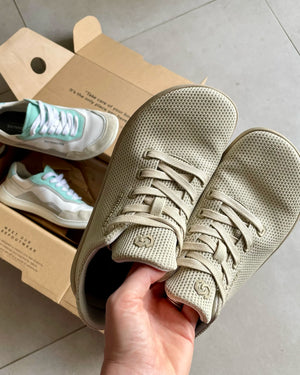
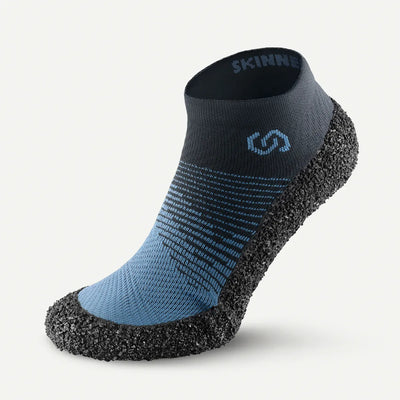
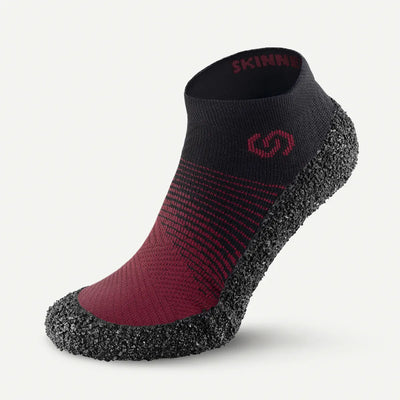
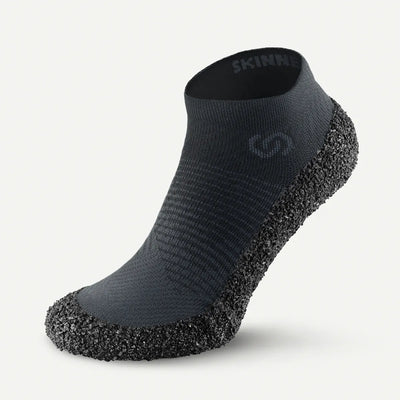
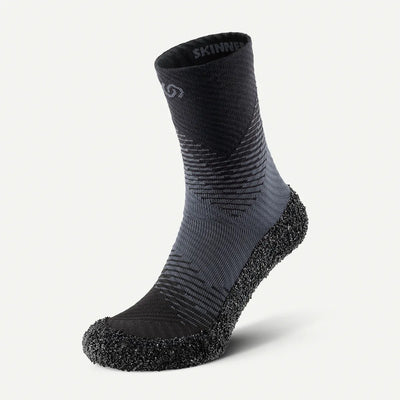
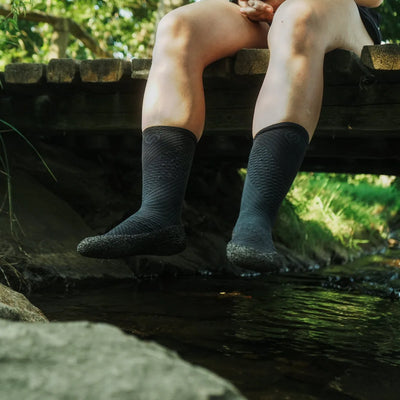
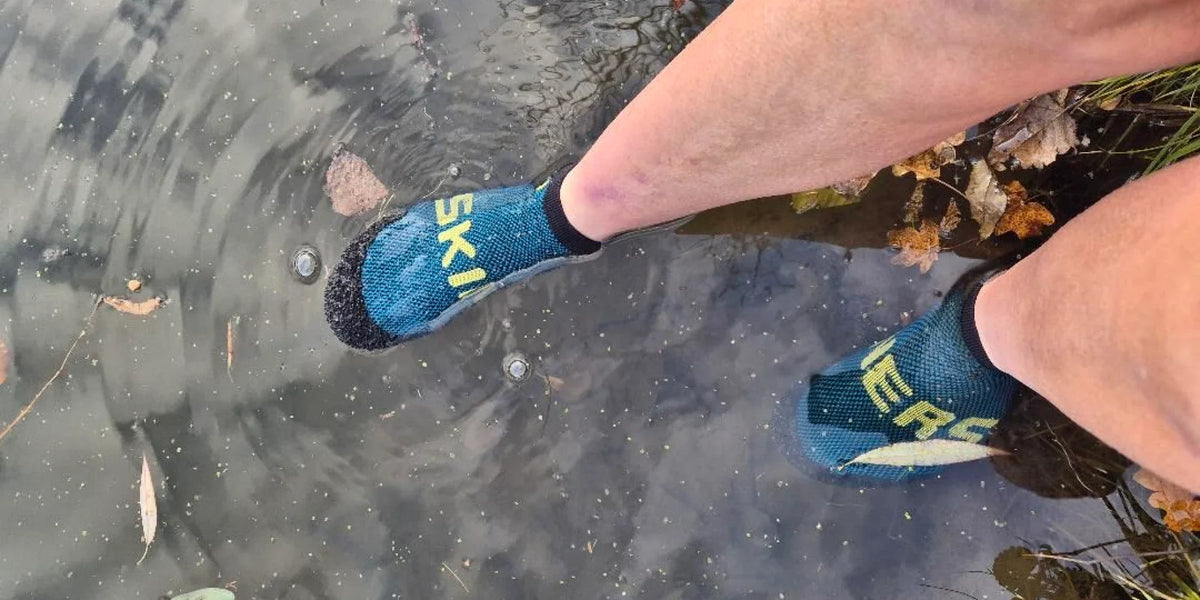
That's why many cold-water swimmers love sock shoes. They protect your feet from pebbles and twigs, stay on in the water, and the non-slip sole gives you a surer step on a slippery shore. With no laces or zips, you can pull them on after your swim even with numb hands. Some people go straight into the water in them; others just use them as slip-ons for the walk to the water and back.

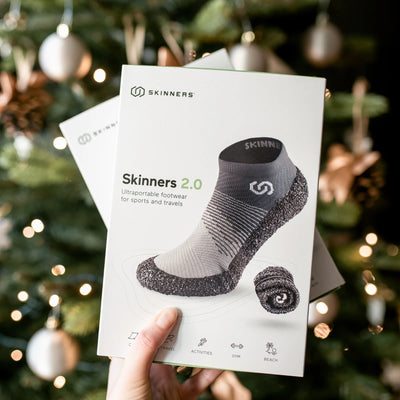
Just keep one thing in mind: sock shoes aren't made of neoprene, so they won't keep your feet warm in the water. You'll feel the cold, and that's the whole point. Back home you can dry them on a radiator, and when they get muddy, just put them in the washing machine. On the way home, keep them in the waterproof pouch that comes in the box.
After your swim: how to warm up properly
Warming up after cold water is just as important as the swim itself.
- Dry off and dress straight away. Start with your upper body, hat and gloves.
- Get moving. A short walk or light exercises help your body generate heat.
- Drink hot tea.
- Don't rush into a hot shower. Your body should warm up gradually from the inside. A while after getting out, you may feel even colder than in the water. That's normal, and it's exactly why it pays to have warm clothes ready.
Common beginner mistakes
- Starting too fast. A long stay in icy water on your very first try can put you off for good.
- Swimming alone. Even experienced cold-water swimmers go in pairs.
- Poor preparation on the shore. Clothes that are hard to put on and bare feet on cold ground can spoil an otherwise great experience.
- Irregularity. Your body adapts to the cold gradually. Long breaks take you back to square one.

Cold-water swimming for joy, not performance
Cold-water swimming should be something you enjoy and want to come back to. Start slowly, find a buddy and prepare the things that make your time on the shore easier. And if you're looking for water footwear, see how cold-water swimmers wear sock shoes.
👉 Choose your Skinners sock shoes and head to the water.
This article is for information only and is not a substitute for professional medical advice. If you have any health issues, talk to your doctor before cold-water swimming.
More articles
 BAREFOOT START
Do you have flat feet and wonder whether barefoot shoes are right for you? We explain what fallen arches are, what research say...
Read article SHOES
Roughly one in four adults has a bunion. We explain why it develops, what barefoot shoes can do about it, which exercises and s...
Read article SHOES
Looking for men's winter shoes that handle frost, mud and the city? We show you how winter barefoot shoes keep you warm, how Du...
Read article